 TRY BOTTLELESS WATER TODAY FOR FREE!
No Electricity. No Computer. No Salt Waste. How Does That Even Work?
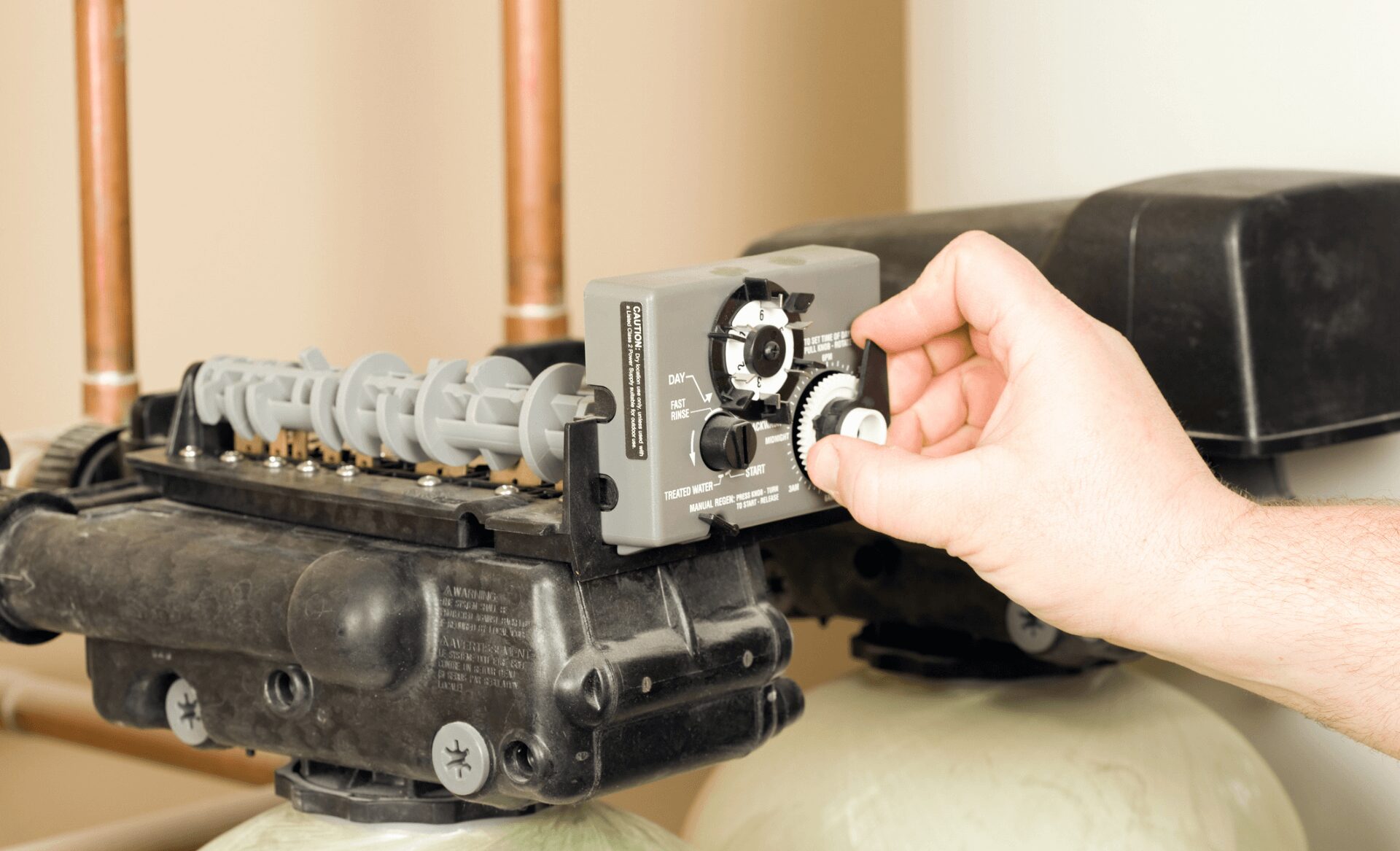
When people hear that Kinetico water softener systems operate without electricity and without a programmed timer, the first reaction is usually some version of: How?
It is a fair question and one we field often here at Aqua Clear Water Solutions. Most appliances in your home that treat or move water need electricity to function. The idea that a water softener can be fully automatic, highly efficient, and still run entirely on water pressure tends to feel counterintuitive. Here is the explanation without the marketing language.
What Most Softeners Actually Need
A conventional water softener uses an electronic control valve to manage its regeneration cycles. You program it with a schedule. Every three days at 2 a.m., or every night, or whatever the default setting is. The control board runs that schedule, initiates regeneration when the timer says to, and draws power continuously to keep that system active.
This means the softener needs a power outlet nearby. It means the control board is a potential point of failure. It means the system operates on a schedule regardless of actual water usage. And it means that if the power goes out or the board malfunctions, the softener may stop working or behave unpredictably.
How Kinetico’s Approach Works
Kinetico systems use the kinetic energy of flowing water to power the entire operation — including the control valve, regeneration, and monitoring. There is no electrical connection and no circuit board.
Instead of a timer, Kinetico uses a meter-based control that tracks the actual volume of water used. When the resin in the softening tank has processed enough water to approach its capacity, the system initiates regeneration automatically — based on real usage, not a preset schedule.
This is called demand-initiated regeneration, and it has two significant advantages. First, the system only regenerates when it actually needs to, which reduces salt and water consumption compared to systems that regenerate on fixed schedules regardless of usage. Second, the absence of an electronic control board eliminates a common source of mechanical failure and removes the maintenance complexity that comes with circuit boards and programming.
The Twin-Tank Design
Another piece of Kinetico’s design that raises questions is the twin-tank configuration. Most conventional softeners have one tank. Kinetico systems have two.
The reason is practical: a single-tank softener goes offline during regeneration. That means hard, untreated water can reach your fixtures and appliances for the duration of that cycle — often several hours. If the timer is set for 2 a.m., most households will not notice. But if your usage patterns shift, or if the system needs to regenerate at an inconvenient time, you can end up with hard water when you expect soft.
With a twin-tank system, one tank is always in service. While one tank is regenerating, the other is actively softening your water. The switchover is seamless and requires no user action. Soft water is available around the clock, including during regeneration.
Why No Electricity Is Actually a Reliability Argument
Removing electricity from the equation is not a quirky design choice — it is an engineering decision that increases reliability. Electronic control boards are the most common point of failure in conventional water softeners. They can malfunction, lose programming after a power outage, or require professional service to reprogram. Kinetico’s mechanical design sidesteps all of that.
Kinetico systems are built to last, and the company backs that with one of the stronger warranties in the water treatment industry. The absence of electronic components means fewer parts that wear out, fewer service calls, and a longer expected system life.
What It Means for South Texas Homeowners
In a climate where power fluctuations and weather events are a reality — and where hard water is the norm year-round — a system that does not depend on electricity and adapts to actual household usage rather than a preset timer is a practical advantage. You are not managing programming. You are not worrying about what happened to the schedule after the last outage. The system runs, and it runs on water alone.
If you want to see how Kinetico’s technology compares to your current setup, Aqua Clear Water Solutions offers free in-home water tests across McAllen and the Rio Grande Valley. So, contact us today to get started.